Personal LD projects for SS13
Space station 13 is an open source multiplayer roleplaying game where dozens of players are tasked with maintaining a functioning space station against both internal and external threats
The game offers a great deal of mechanical complexity for each individual job role present in any given round and the levels in which these rounds take place are equally complex.
Every wall can be destroyed, every power conduit needs to be connected to the power grid, a complete and closed atmospherics pipe loop needs to provide oxygen to the crew and every job needs its own functional workspace made with the needs of their role in mind, to name a few examples.
For this game I have frequently made contributions by putting my level design skills to work as it offers an exciting challenge with the payoff being a map that sees use by the very players I like to interact with whenever I play the game myself.
Below you will find some of my more prominent map projects related to space station 13 and its many sub-communities.
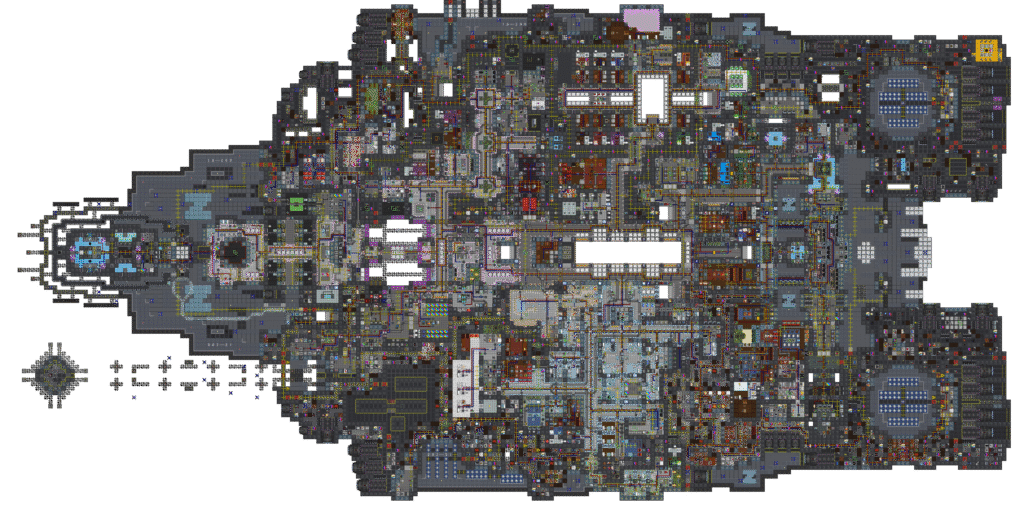
Pictured above:
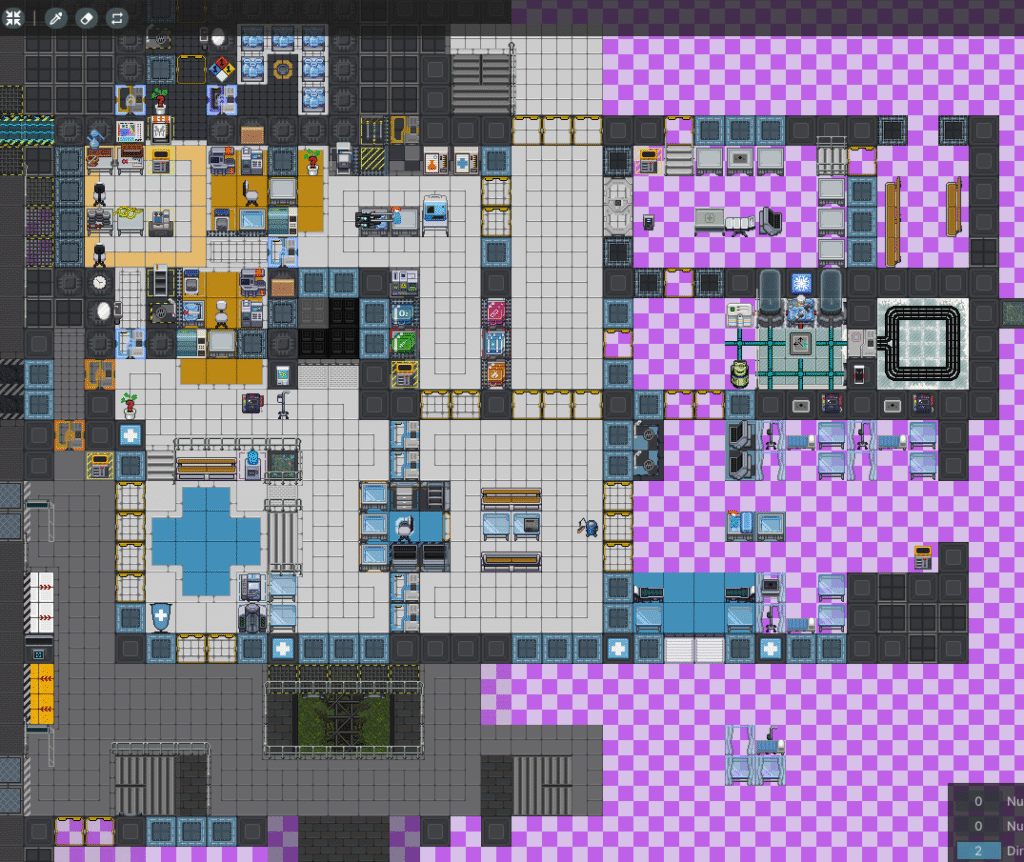
The top layer of a 3 layer map I made called blueshift, it’s been rotated 90 degrees to fit the page.
Design process
Of the 3 maps I’ll show you on this project page 2 have been made before I started studying at Breda University of Applied Sciences, due to this a lot of my initial experience making maps for this game was based on intuition and referencing existing maps to guide my process.
We will start off with my first map, an unreleased station called “bluestation” of which the idea came to me on a random afternoon where I sketched out the shape on a napkin.
Bluestation
Bluestation was a neccesary learning moment for me, understandably so as my first real foray into level design it has no shortage of mistakes and ill advised design decisions.
That is in large part why I want to showcase this map, because it helped me learn what worked and what didn’t.
With Bluestation I started off with the general shape of the hallways, in my inexperience I did not realize some of the critical mistakes I was making already at this stage but my intuition to start at the hallways was correct.
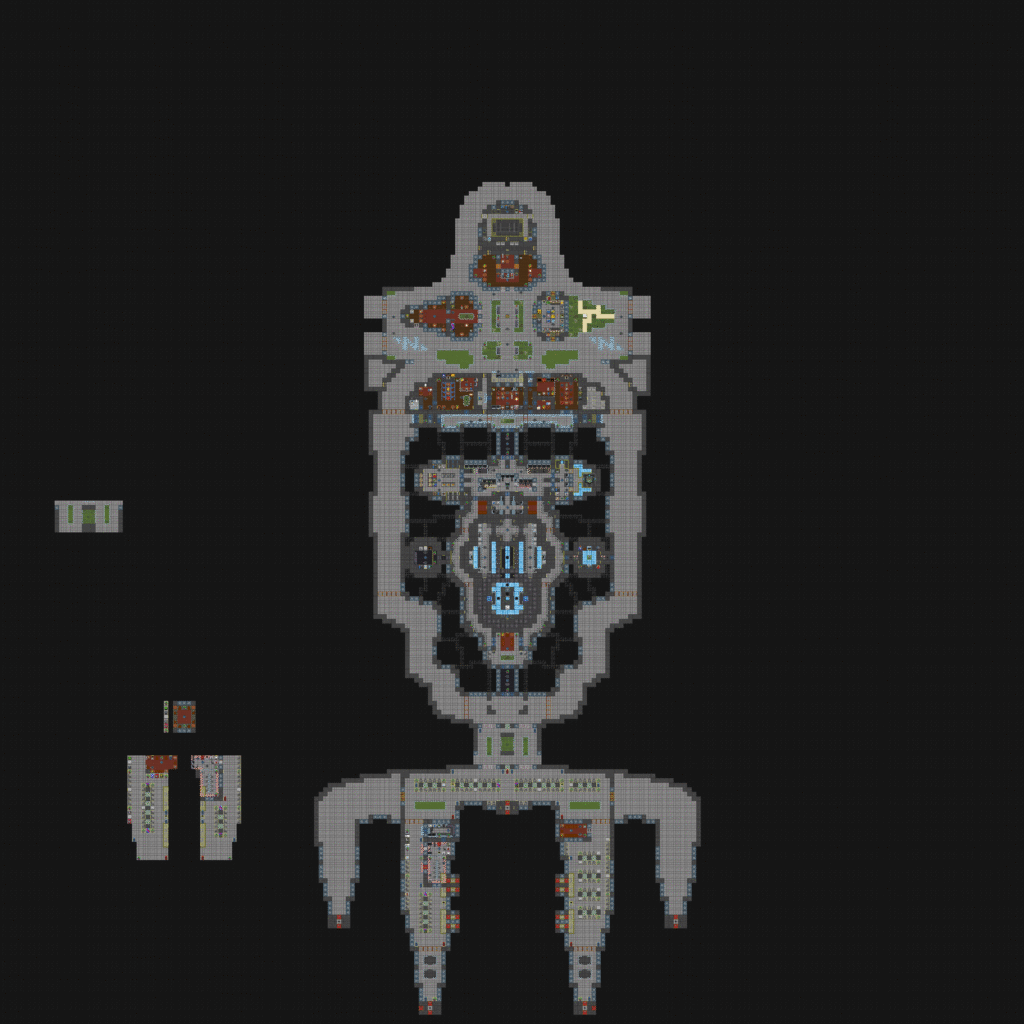
From here I planned out the layout of the departments and slowly worked towards realizing them.
In the image below you can see my initial plan as I shared this with the people helping me get familiar with the process of creating a space station 13 map.
By this point I hadn’t realized the mistakes that were mounting yet but the plan to build out from the hallways was at the very least the correct way to progress as I would come to see in later projects.
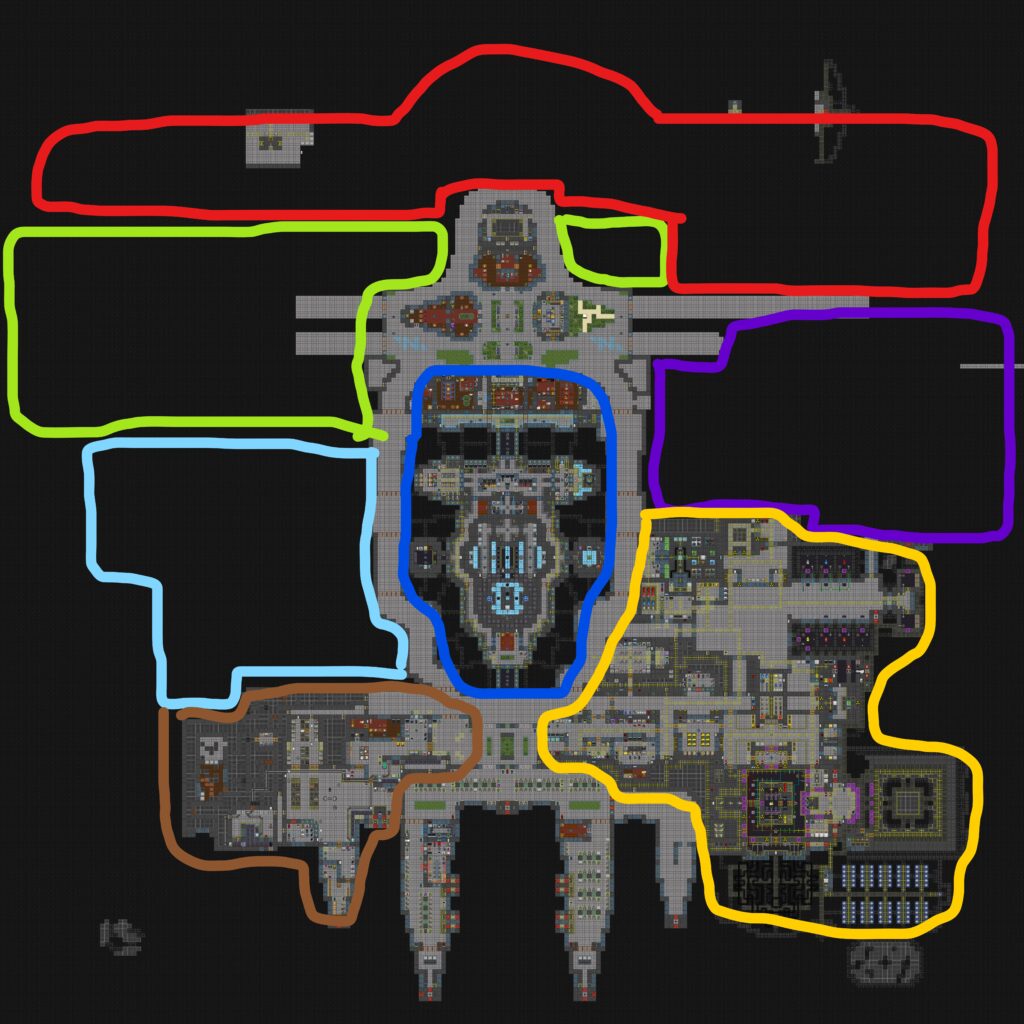
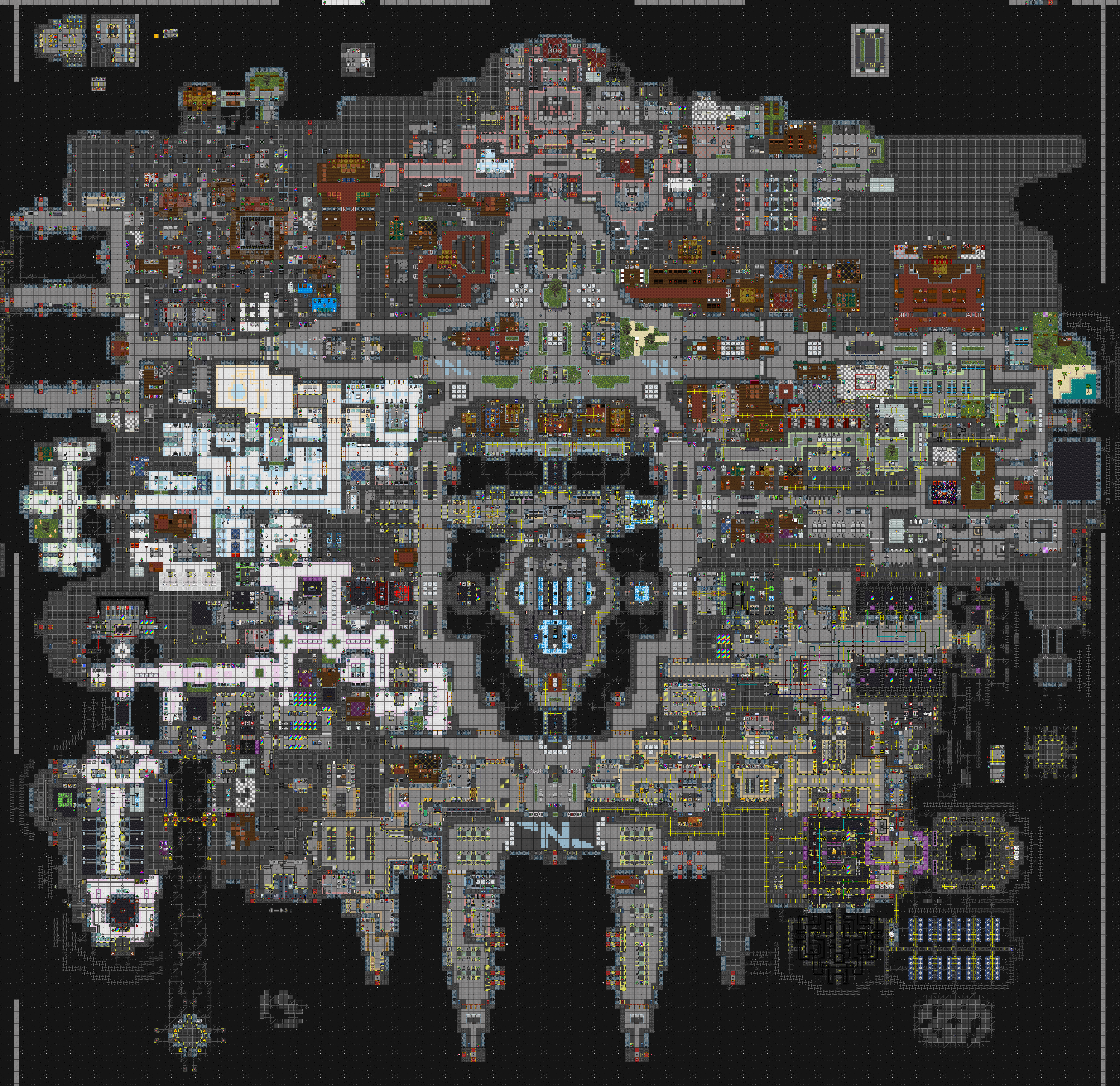
In the latter stages of my first map project Bluestation looks like this, to those familiar with space station 13 the issues present are woefully obvious such as the large, distributed hallway network, lack of maintenance tunnel access in the various departments and the overall bloat.
While at the start of this project I did not recognize these issues by the end I was aware of what was happening.
In the final stages of the project I had been working on for over 4 months I decided to cut my losses and start over as no amount of retroactive fixes would repair the layered mistakes that would make this map feel horrible to play on.
It is simply too large, too spread out and is missing countless other details that prevent it from ever becoming a good map.
From the ashes of bluestation I started again from zero but with the cumulative experience I gained from creating bluestation.
No longer was I going in blind and with the start of this new project I promised myself I would be careful to avoid the chiefest of my past mistakes.
Those being spreading out the hallways, forgetting about maintenance connections and adding unnecessary space to places that don’t need them.
I succeeded on most of these points but as I will explain in the dropdown below not all of them were achieved with the same degree of success.
Blueshift
At the start of Blueshift’s development I took a different approach to Bluestation, I wanted to create a massive spaceship like station and decided the best way to to start is to get the heart of it pinned down early and build around that.
This ended up both a blessing and a curse unbeknownst to me at the time, it reinforced my own vision for the project but also caused more then a few difficulties later on as unlike a more traditional station map I had a lot more “blanks” to fill in around the edges.
It should be noted that around this time a new feature called “Mulit-Z” came out, allowing us to make maps with more then 1 floor, in my ambition I immediately chose to have 3.
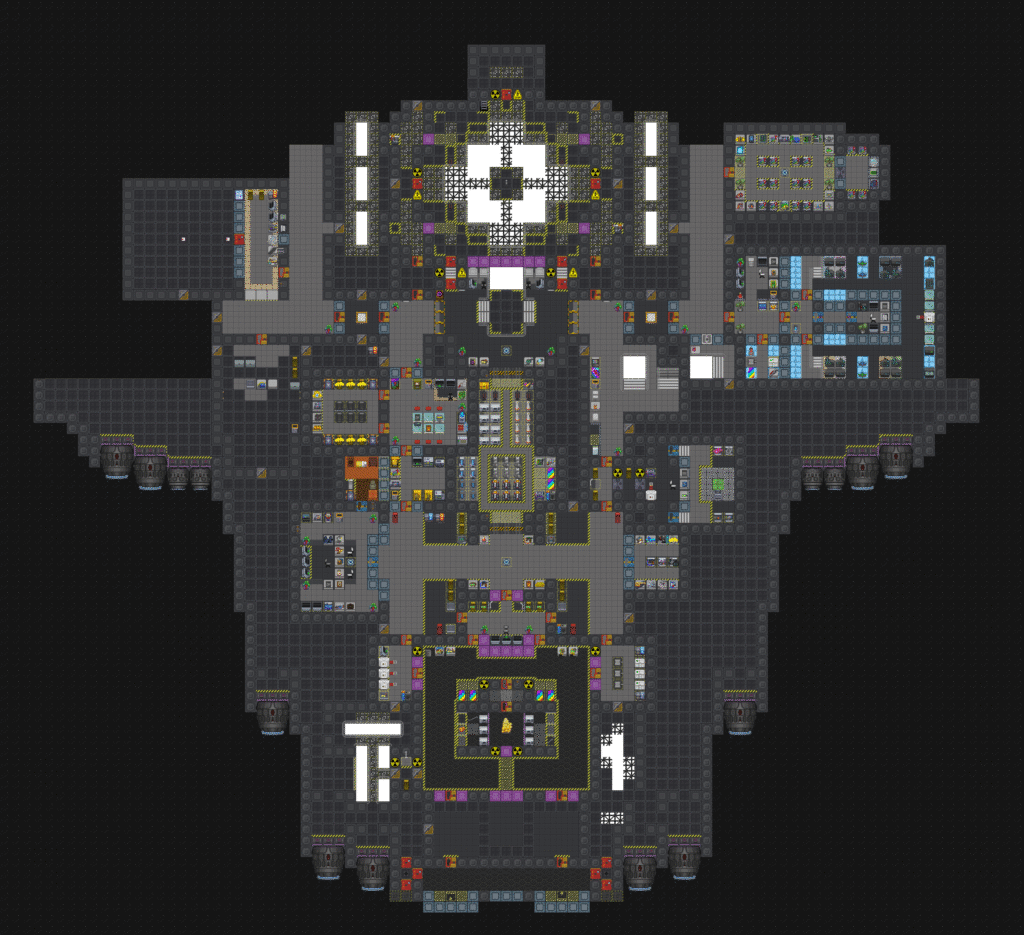
While I was cautious to avoid the tangle of spread out hallways from my last project I still desired to play around with the size and openness of said hallways, in this I came up with a solution I wanted to try out.
Instead of the more traditional “ring” of 3 tile wide hallways that make up the core of most station maps I made a large central corridor that would connect most of the departmental entrances.
It was a gamble I took but one that at the time I gave lots of time and consideration, ensuring that lines of sight would cover as much space as possible as to increase the chance of seeing other players going about their business.
This ended up being the most standout feature of my map, one that worked surprisingly well with community feedback praising the almost “mall like” quality of the map.
The careful eye might also pick up that I was recycling some content from Bluestation, some of the areas I had designed I liked enough to salvage and re-implement.
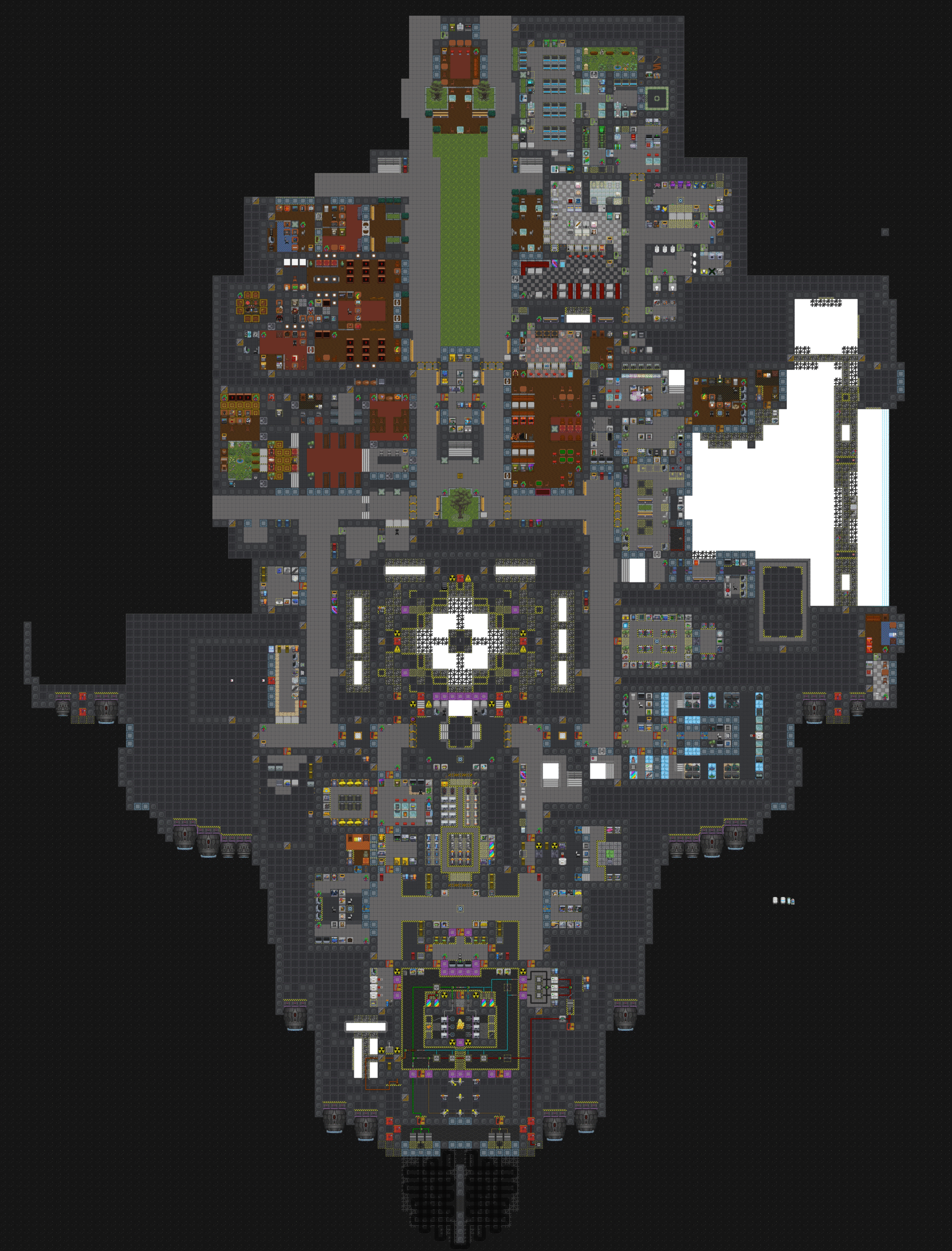
Parallel to the “main” layer I worked on the other 2 layers, the top layer in particular was intertwined with the layout of the layer beneath it.
You can see here I was trying to define the final shape of the map, lining out the borders so I knew the borders within I had to work.
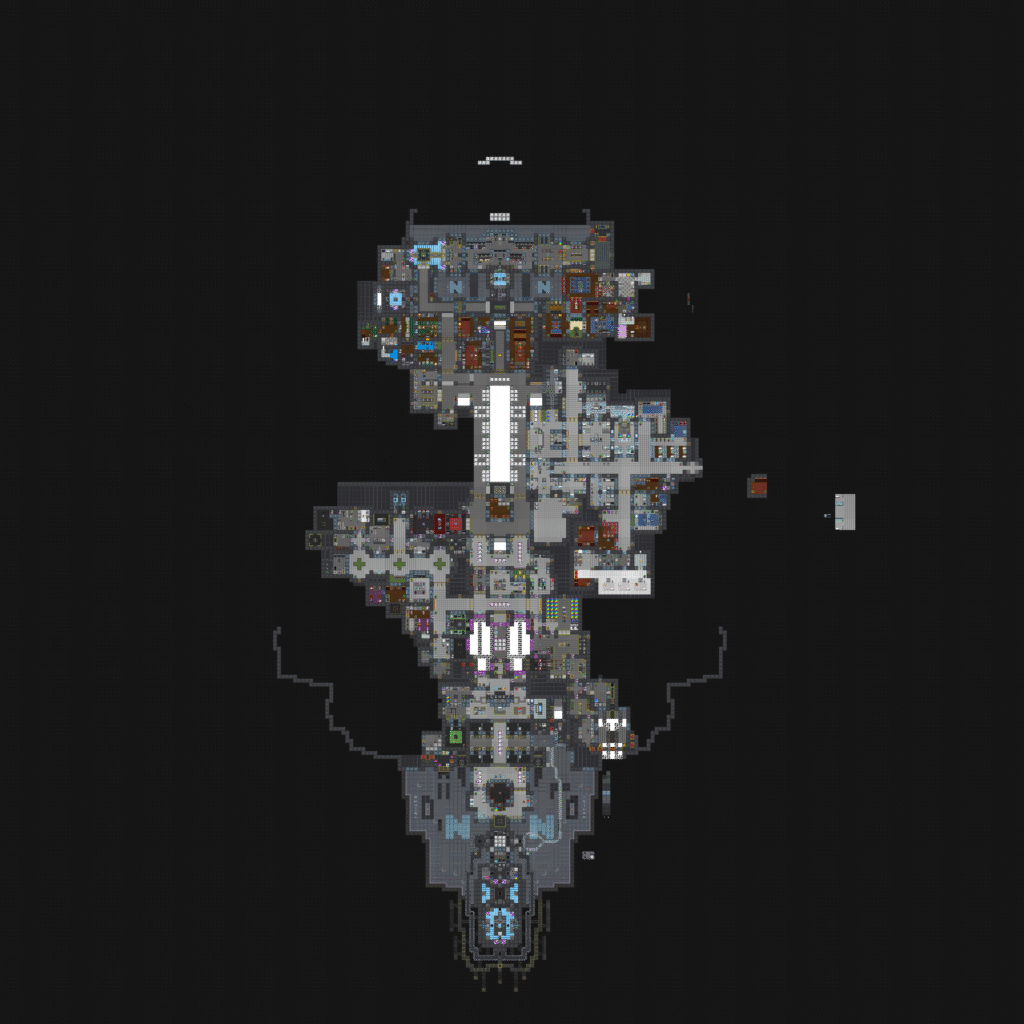
From there on out it was a matter of meticulously filling out the space with the departments and passing over the resulting new areas for lighting, functionality, linking up devices, plumbing and other necessary steps to get the map in working order.
It’s been years since I made Blueshift so the finer details of this long process are lost to me, but the process taught me a lot about working within restricted/limited spaces and using that limitation to fuel creativity, I don’t think my map would have turned out the way it did if I gave myself looser borders to work with like I did with Bluestation.
After half a year of development and polish Blueshift ended up in it’s first form ready for testing and release as you can see below.
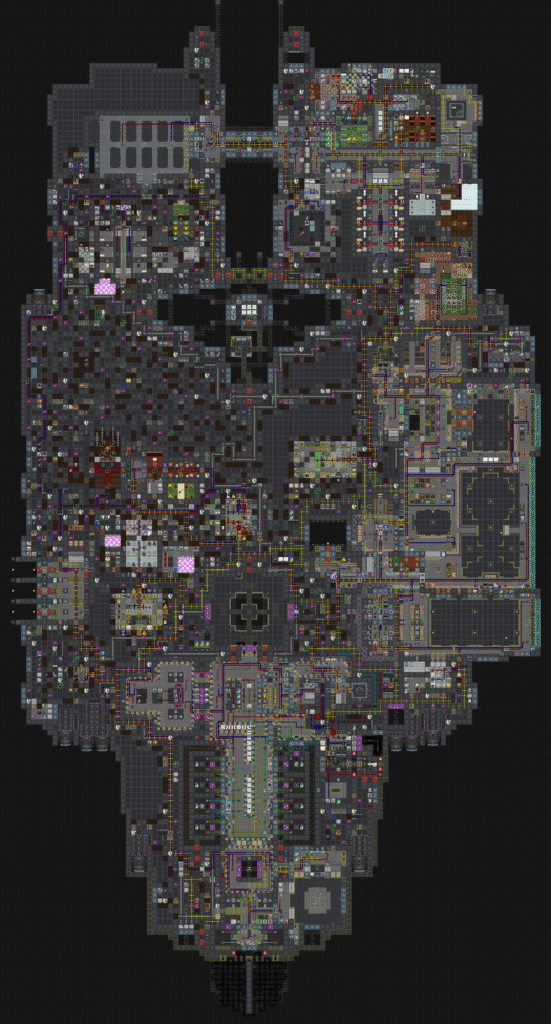
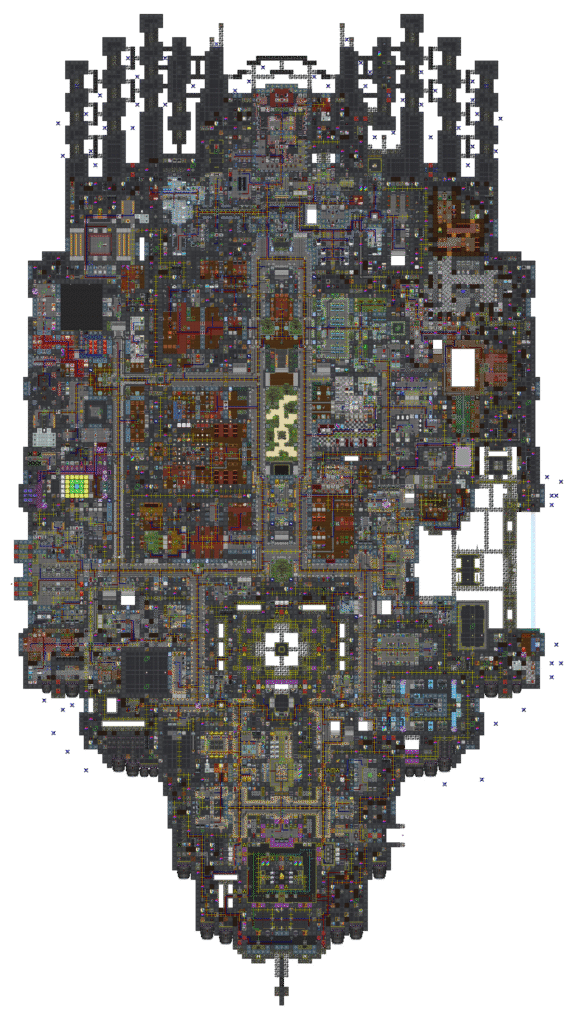
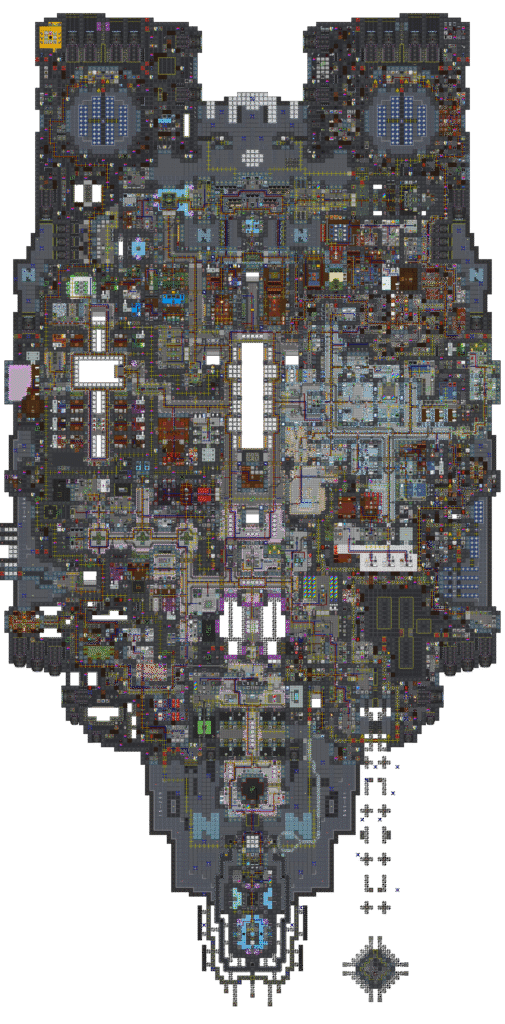
With the release of my first station and the feedback that came with it I spent a considerable amount of time (~1 year) updating and maintaining the map itself as is customary for this community where people take some agency over the content they add and make sure it stays relevant and compatible.
However as life picked up pace I was compelled to hand over the reins to others members of the community as I got less involved primarily due to me enrolling into BUAS for my bachelor in game design.
However now in the third year I took it upon myself to return to my roots and the very reason I decided to go in the direction of game design (and level design specifically) in the first place.
A currently WIP project called “Phoenix station” which takes not just the learnings I took from the prior 2 maps but also the additional skills I’ve gained from my 2 and a half years of being a game design student.
Phoenix station (Work In Progress)
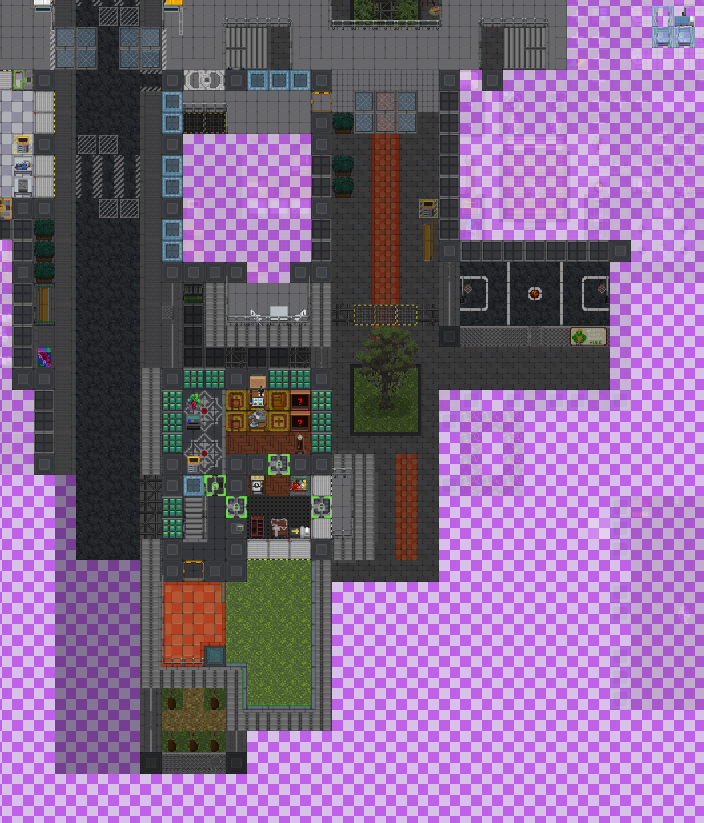
I started out with a simple foundation, I had the idea for a “town square” kind of heart of the map.
This being a personal project I allowed myself to forego strict documentation and process in favor for just letting my creativity take the lead, there was no expectation for delivery after all beyond my own wishes to release it if it turned out alright.
But I did adhere to some of the basics, I need to have a concept of where people will be walking in order for me to form the surrounding content and in this case I also applied my lessons from before where I keep everything within line of sight and together, even the bridges are see through to further aid in players witnessing other players present around them.
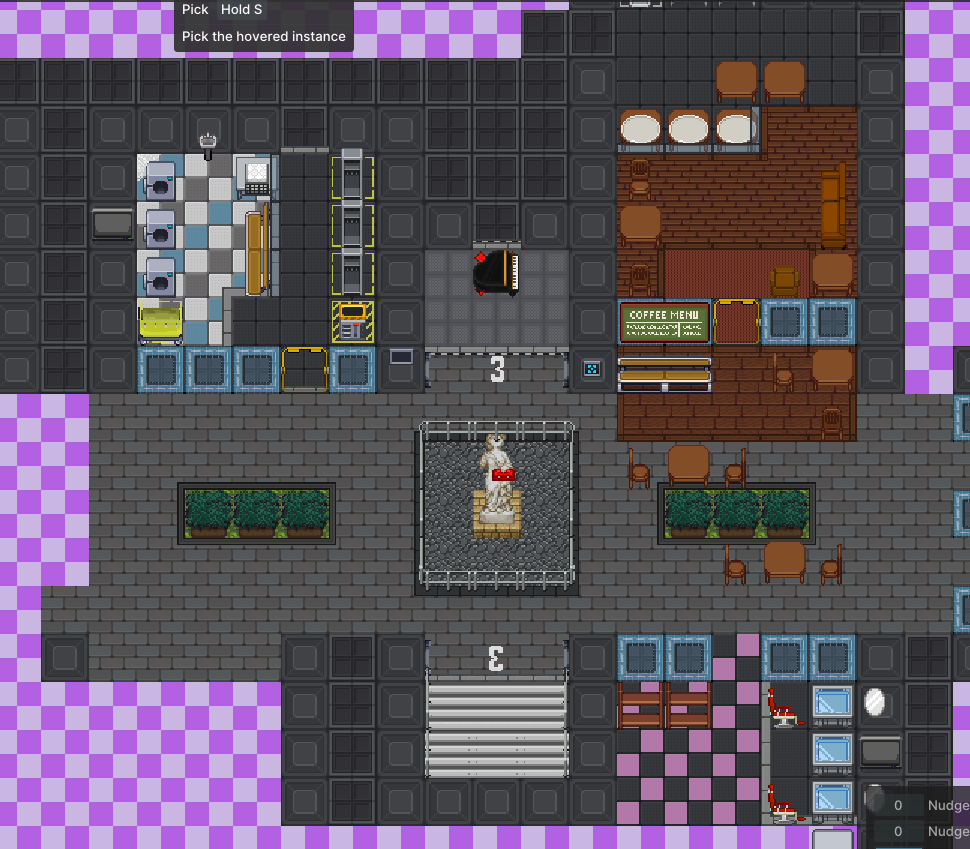
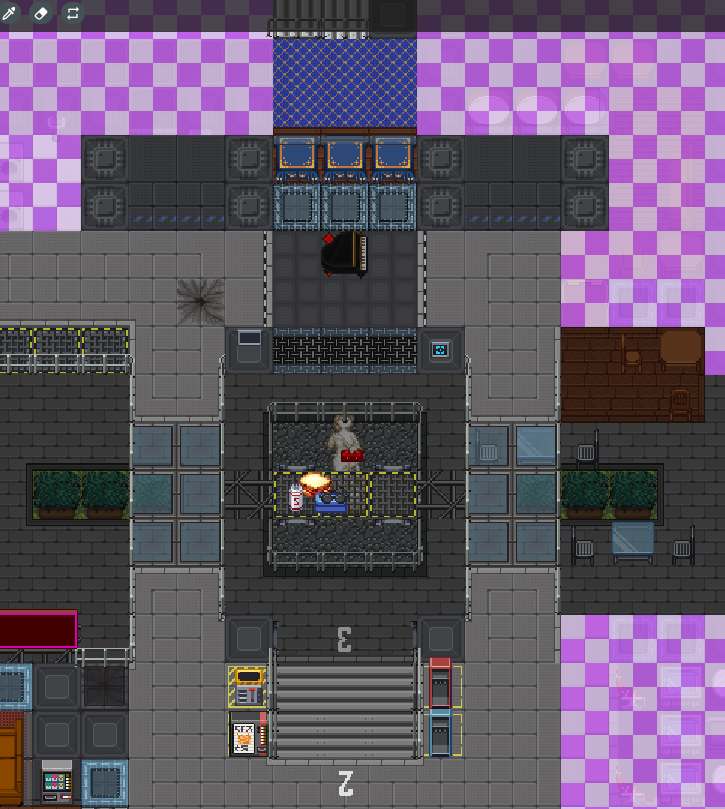
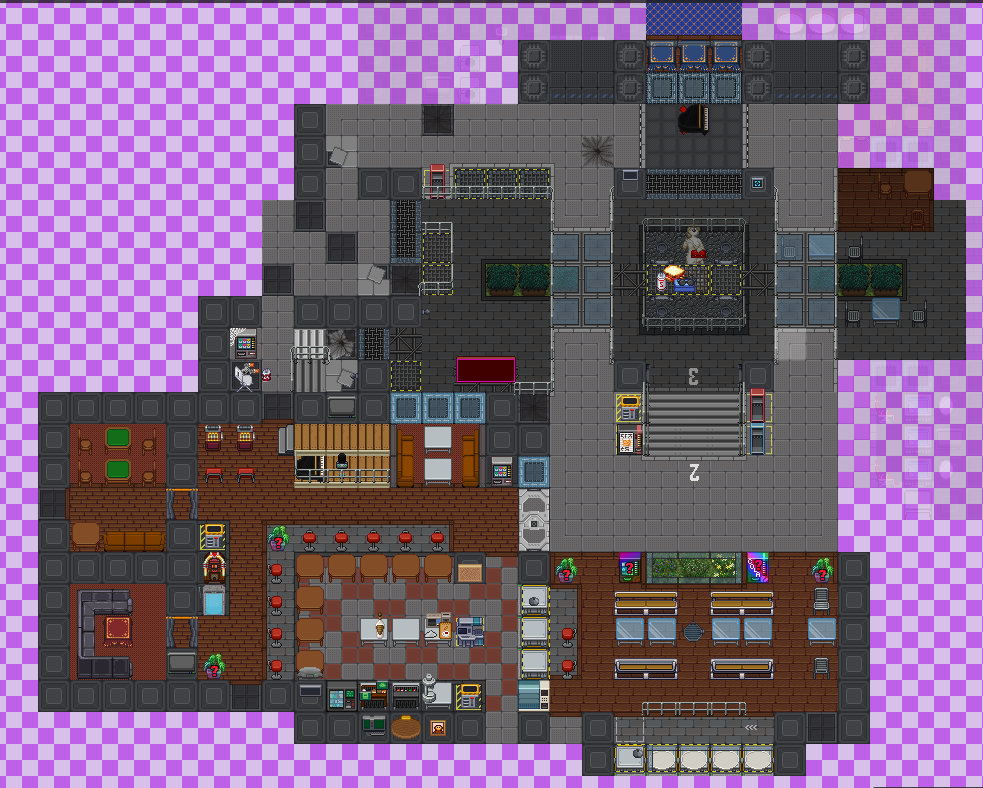
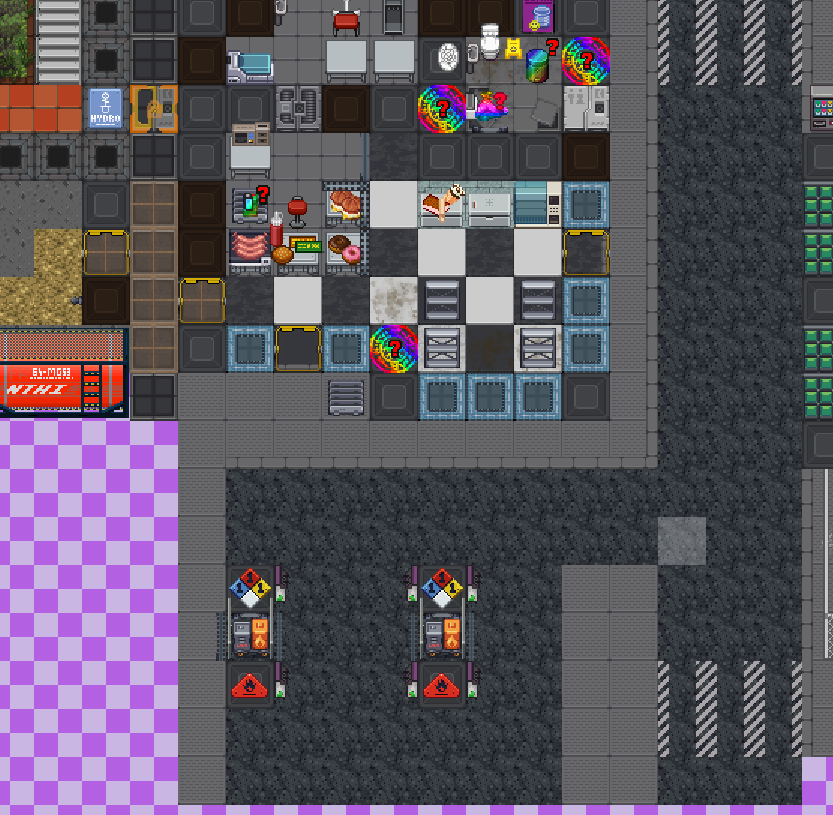
From this “seed” I started to grow out the surrounding areas as I saw fit, starting with the service areas as those are my favorite to map out and I feel they should be front and center as they bring players together, driving roleplay and interaction which the game thrives on.
This means the kitchen, bar (which I already finished for the most part by this point), hydroponics, the barbershop, the vacant commissary (free space for players to set up their own store) etc..
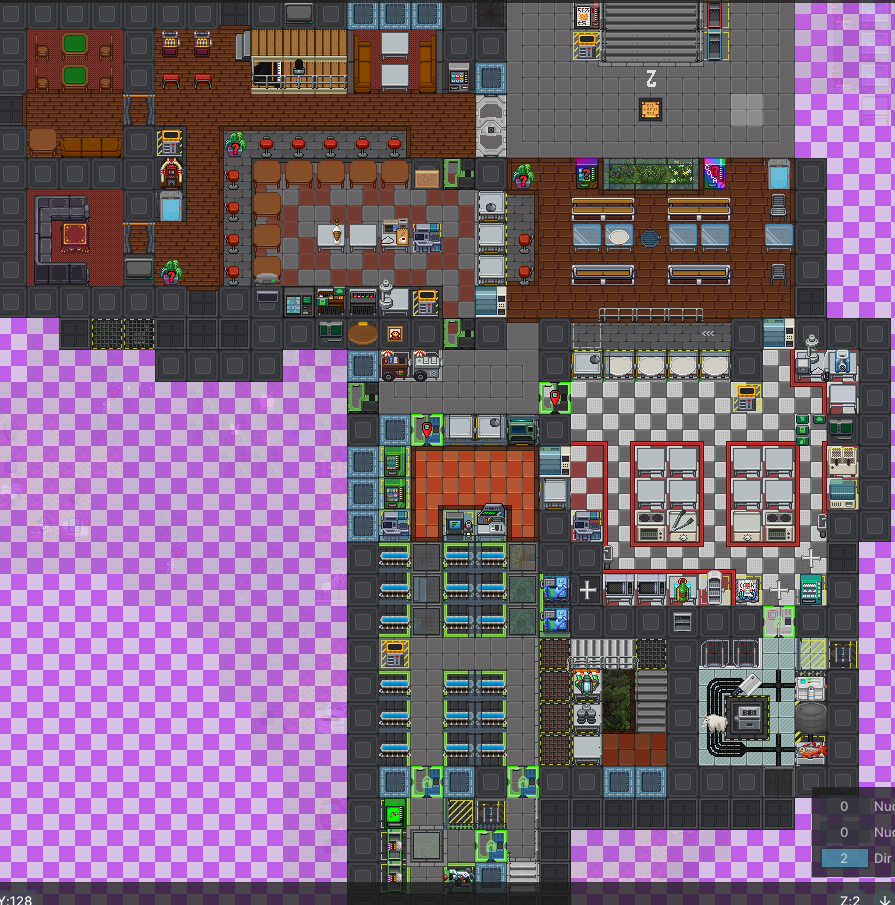
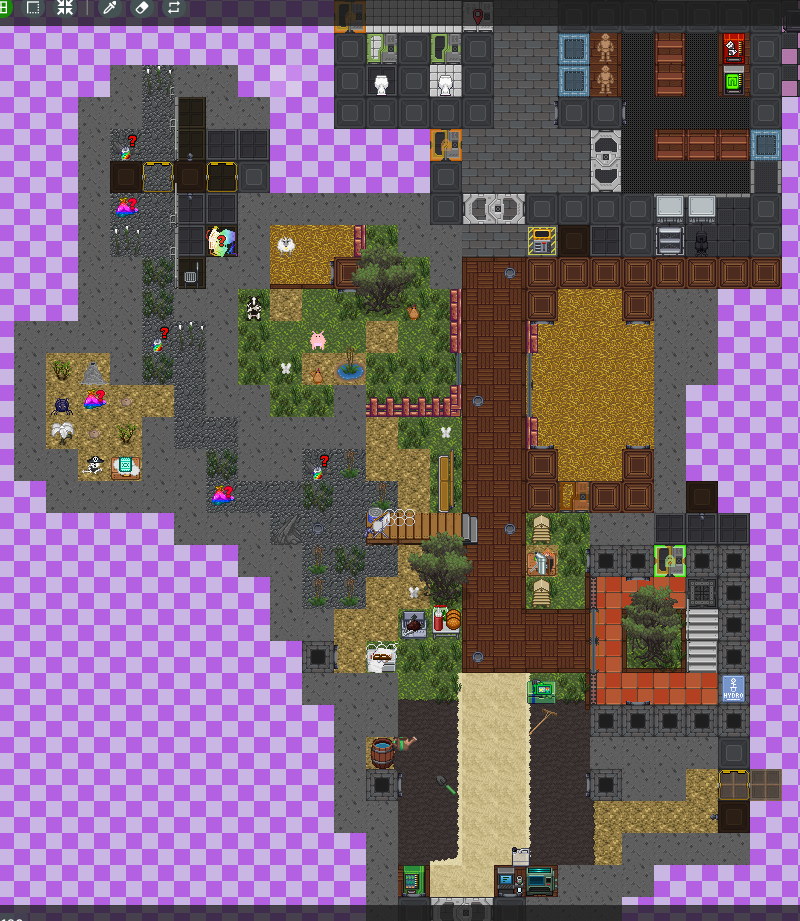
It took considerable effort to keep up with both layers that I was actively working on, the top layer however remains relatively undeveloped as it is less directly intertwined as the other two layers (around this time I figured out the map will be underground and the planet surface is an icy hellscape).
While at first I was nervous that all of this would be too challenging since I hadn’t mapped for this game in so long I was pleasantly surprised by my own work and the feedback I received on said work!
Relatively satisfied with how these starting areas were shaping up I started branching outwards, this map would be more then just a town square with some restaurants around it, I wanted to make a proper urban map as those were few and far between.
But I felt confident that I was up for the challenge.
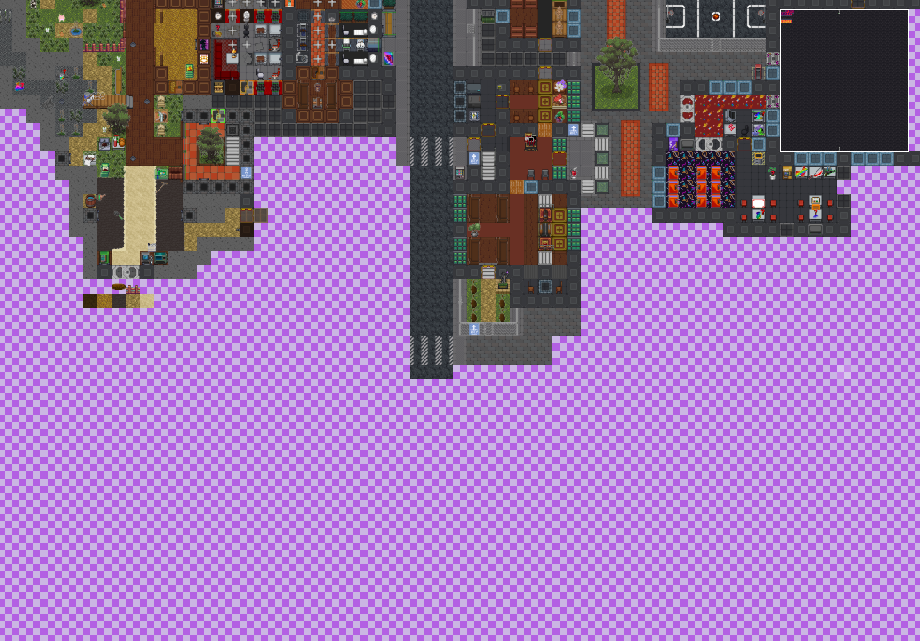
Any good good town needs roads and perhaps public transport, this would form the “spine” of my map.
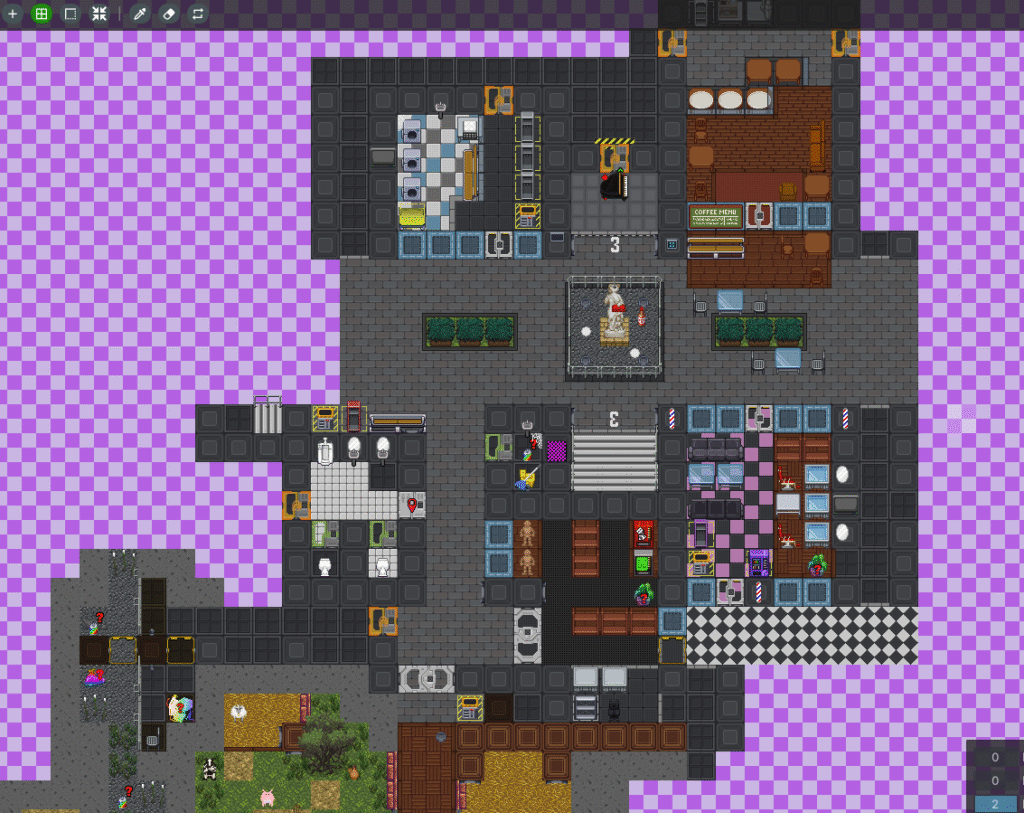
(also i swapped around the cafe and put the library in its original spot)
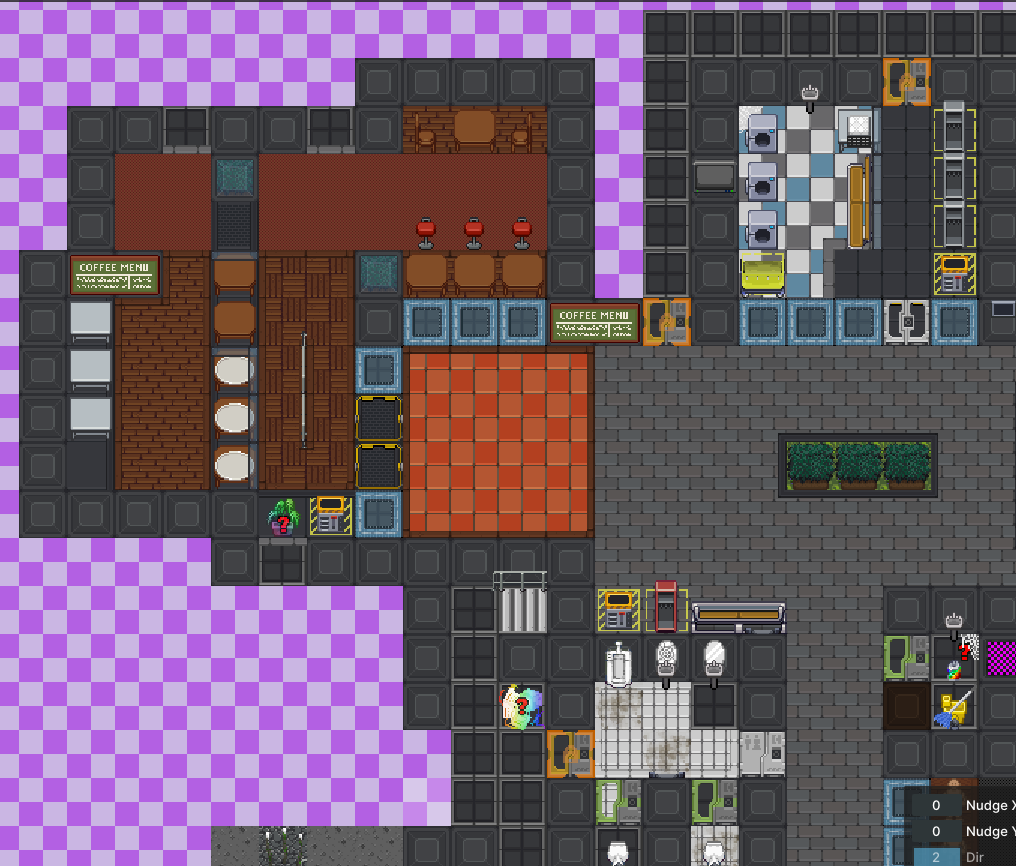
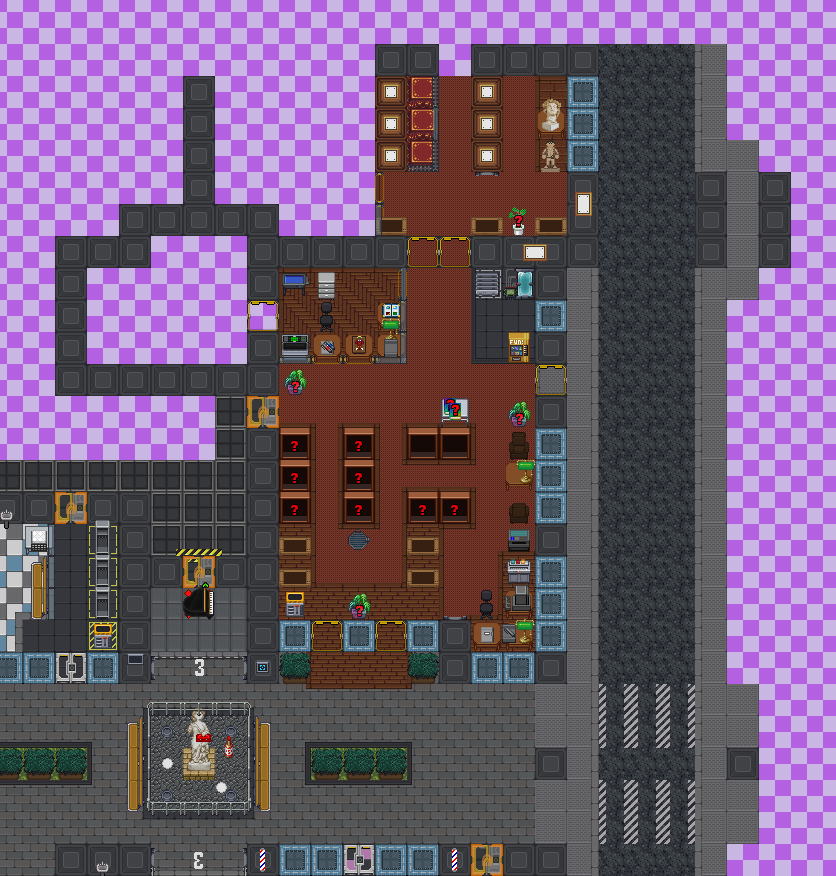
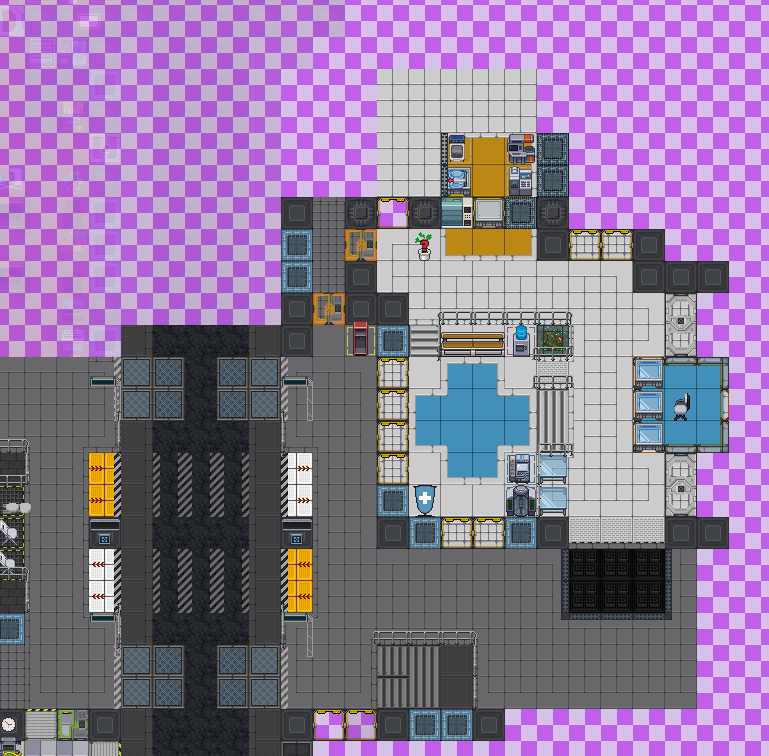
I decided to place the hospital very close to this arterial transport route as no doubt players would get injured and need urgent care, While a lot of my design process was in the moment for this project there were certain considerations I made well in advance.
After all the map actually needs to play well in order for it to be good.
I worked on the hospital for a while until I felt I needed to focus on something else instead, I have learned to listen to the creative part of my mind when it draws itself to something else.
Otherwise I end up far less productive then I would like grinding away at the same issue when instead I could be far more productive working on another area.
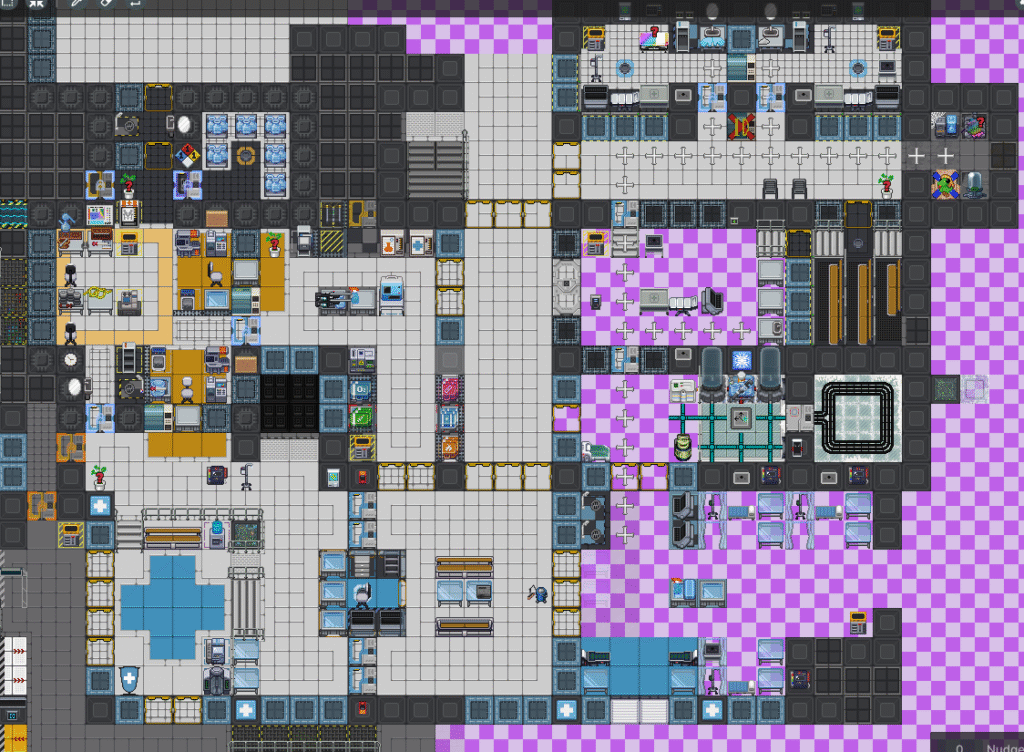
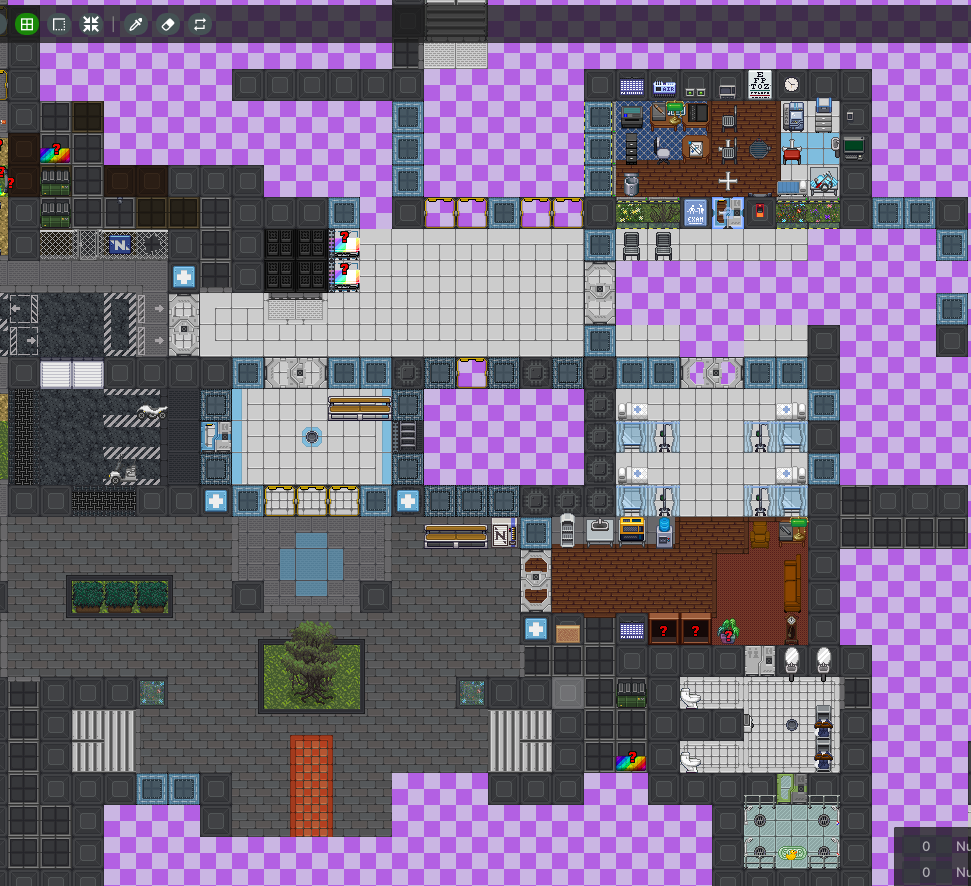
So I took off towards command department, another one of my favorite areas to map out and one that I wanted to take an unique flare on, my idea being to present it as a town hall rather then the usual “bridge” of a space station.
I took care to make some of the offices look more like apartments to play in on the theming of this being a town whilst not overdoing it on the added fluff.
Compared to my previous 2 maps a lot of the areas I made in this project are considerably more dense and compact which further stimulates the feeling of this place feeling lived in.
My use of materials and texture has also improved, using the limited selection available to distinguish between areas and to add visual detail without necessarily adding more stuff which also increases immersion.
Empty and plain areas feel strange and in turn act as friction against immersion.
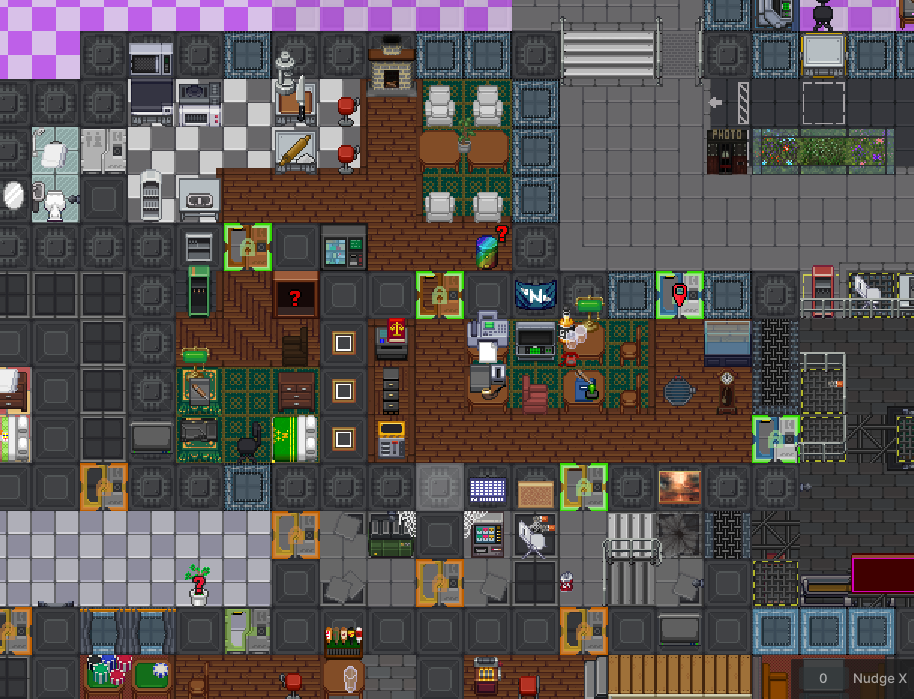
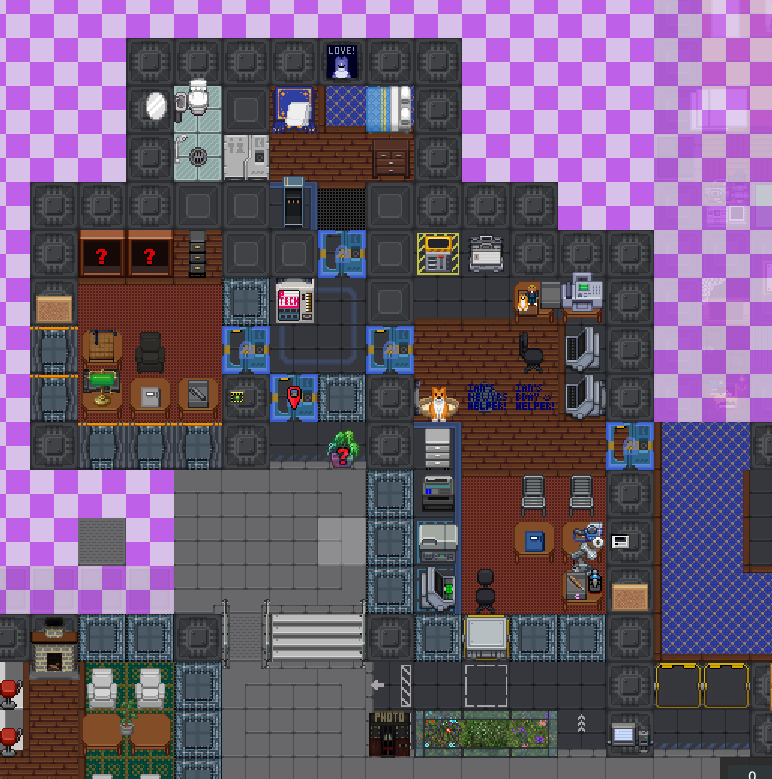
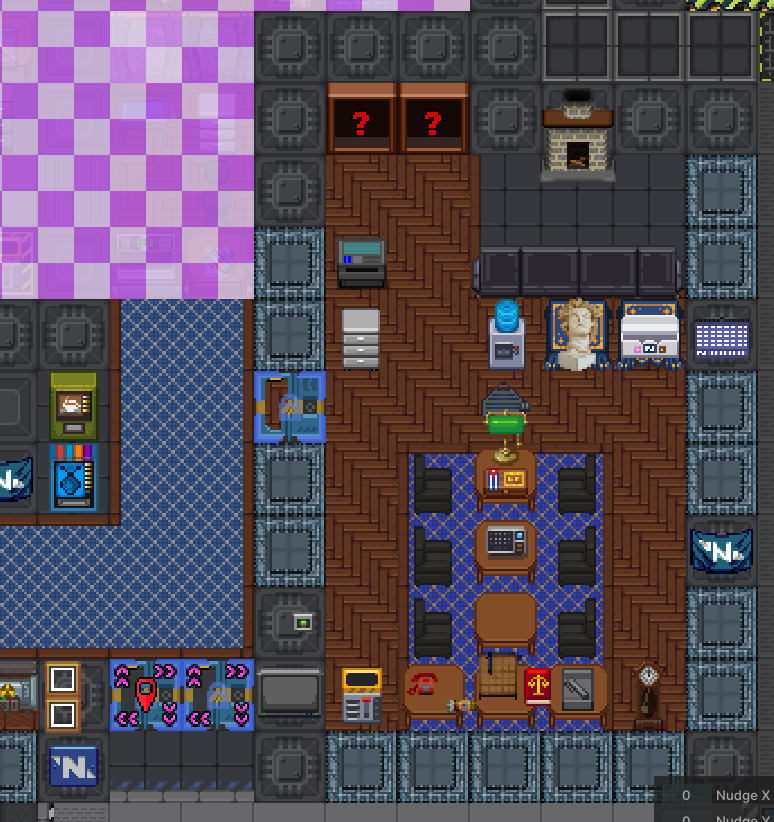
From here I was pretty satisfied to keep command in the half finished state it was in, my mind called towards the civil areas of the map that I felt needed to be more defined to further insist upon that urban feel that I was trying to create.
So we move back over to the other side of town where the relatively barren area in front of the medical center sits ripe for transformation, I wasn’t pleased with it and it needed to be more then just a plain hallway to reach gameplay critical areas.
If I wanted this to feel like a town I needed to use the space available, plain walls are not acceptable!
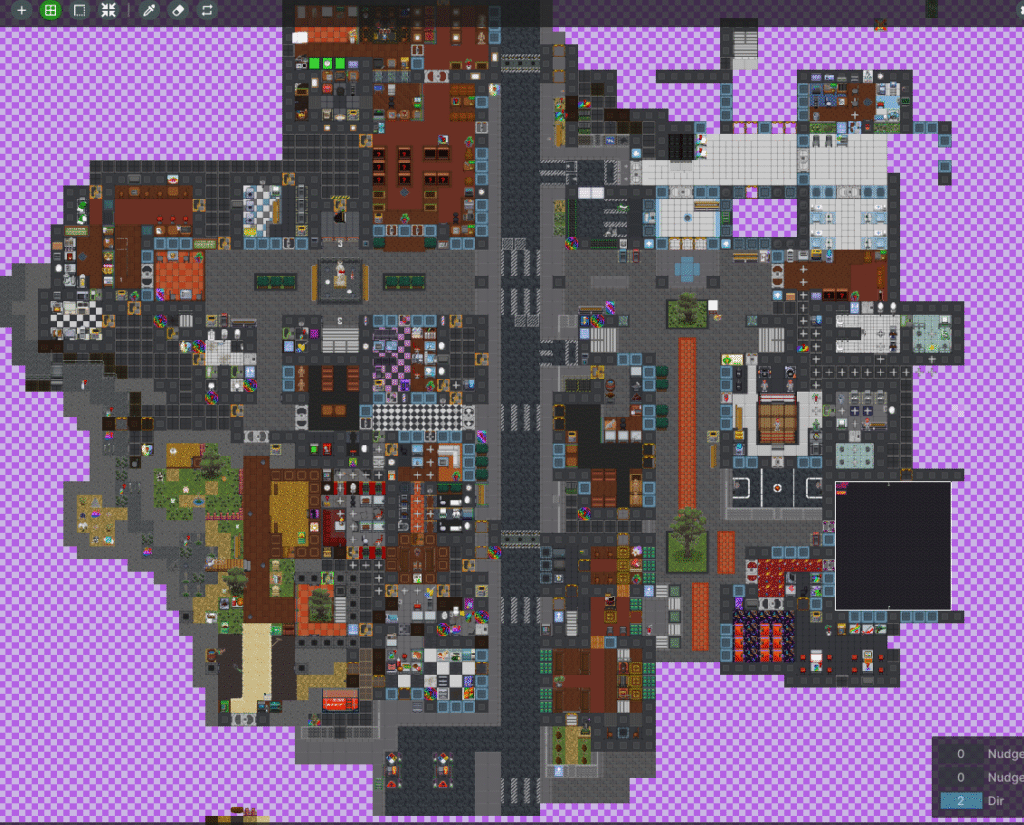
And so the “commercial” district came to be, as can be seen below with me building out this boulevard and its rooftops (for a twist on the more traditional maintenance tunnels, instead using alleyways and catwalks)
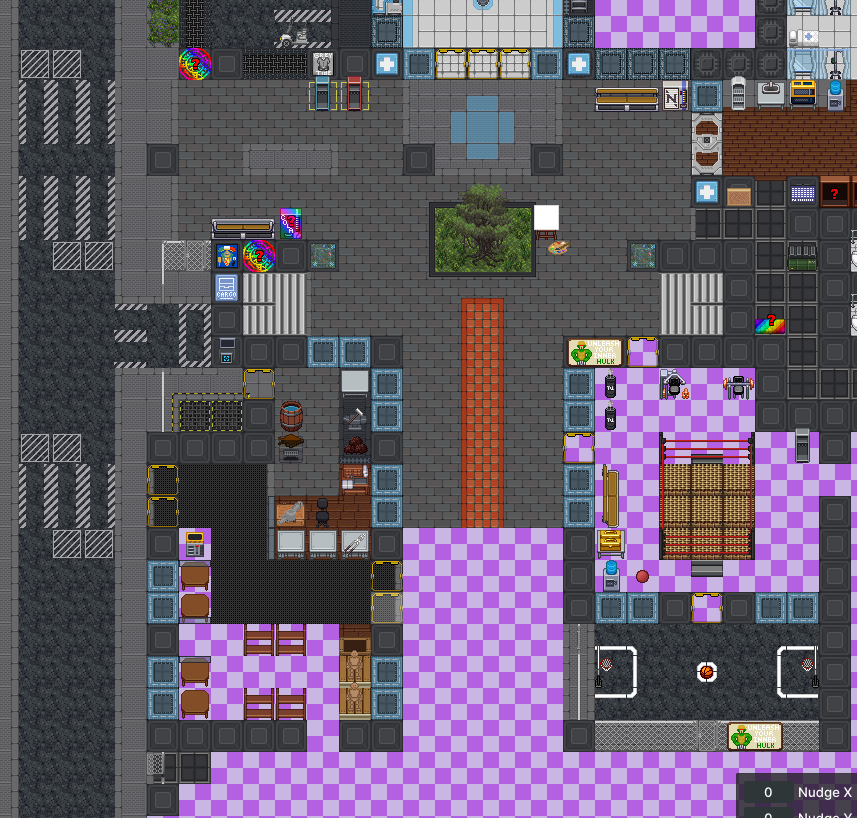
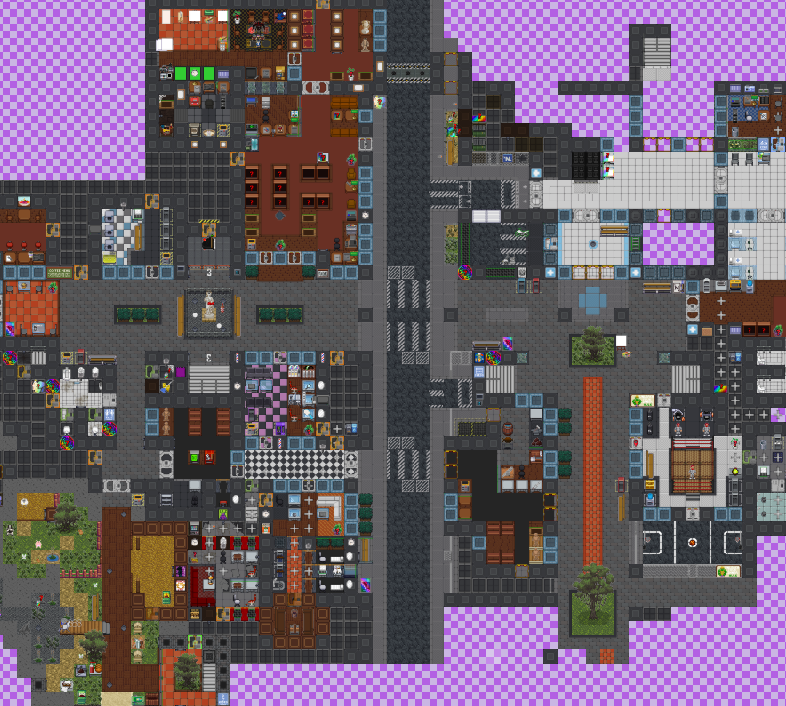
The story is far from over, I’ve yet to complete the map but since I’m already this far I am confident that soon™ there will be more to read, or perhaps even a full release!